

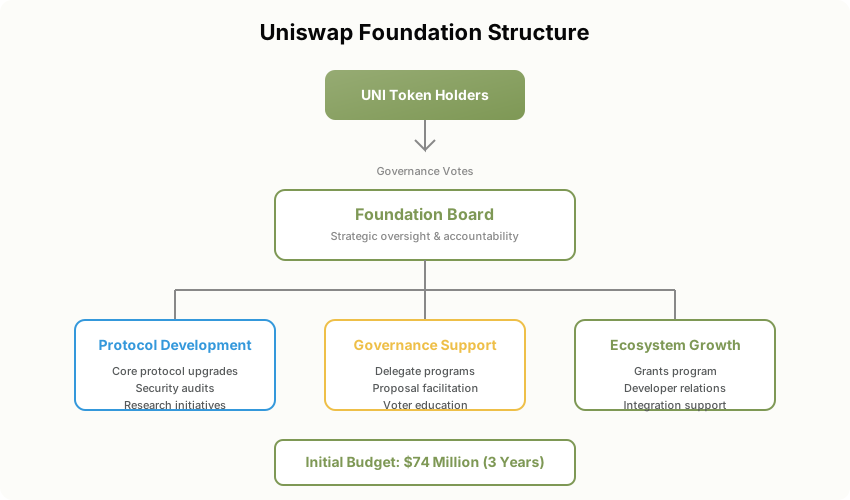
The Uniswap Foundation represents a critical experiment in decentralized protocol stewardship. Established in 2022 with a $74 million budget, the Foundation bridges the gap between community governance and operational execution. This guide explores its structure, initiatives, and role in Uniswap’s future.
Origins: Why a Foundation?
Before the Foundation, Uniswap faced a coordination problem:
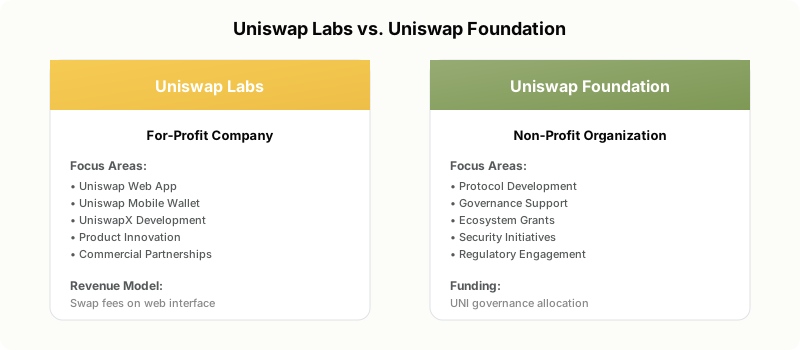
- Uniswap Labs — The company that built the protocol, but focused on products
- UNI Governance — Could vote on proposals, but lacked execution capacity
- No dedicated entity — To support the protocol’s long-term development
The Governance Proposal
Key Vote Details
- Proposal: Create Uniswap Foundation
- Budget: $74 million over 3 years
- Approval: 86 million UNI in favor (99%+)
- Launch: September 2022
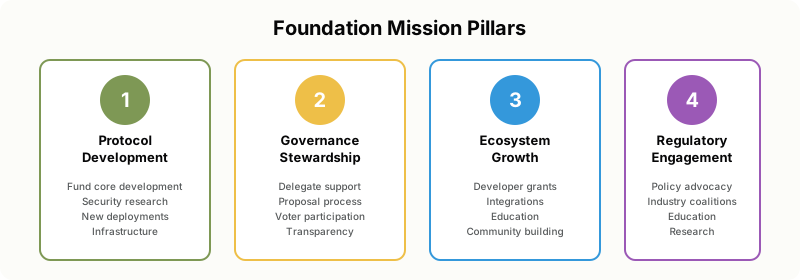
Foundation Mission and Mandate
Key Initiatives and Programs
1. Grants Program
The Foundation’s grants program funds builders creating value for the Uniswap ecosystem, with grants ranging from $5K-$25K for small projects to $100K+ for strategic initiatives.
2. Delegate Reward Program
Active governance participation requires time and expertise. The Foundation compensates delegates who contribute meaningfully.
3. Security Initiatives
Security is foundational to protocol trust, including audit funding, bug bounties, and security research.
Relationship with Uniswap Labs
Key Takeaways
- The Foundation bridges governance decisions and operational execution
- $74M budget funds grants, development, and ecosystem growth
- Distinct from Uniswap Labs (company) — focused on protocol, not products
- Accountable to UNI holders through transparent reporting
- Key programs include grants, delegate rewards, and security initiatives