

Uniswap V4 represents the most ambitious evolution of the protocol yet. With hooks, developers can customize every aspect of pool behavior—from dynamic fees to MEV protection to on-chain limit orders. V4 transforms Uniswap from a DEX into a platform for building AMMs.
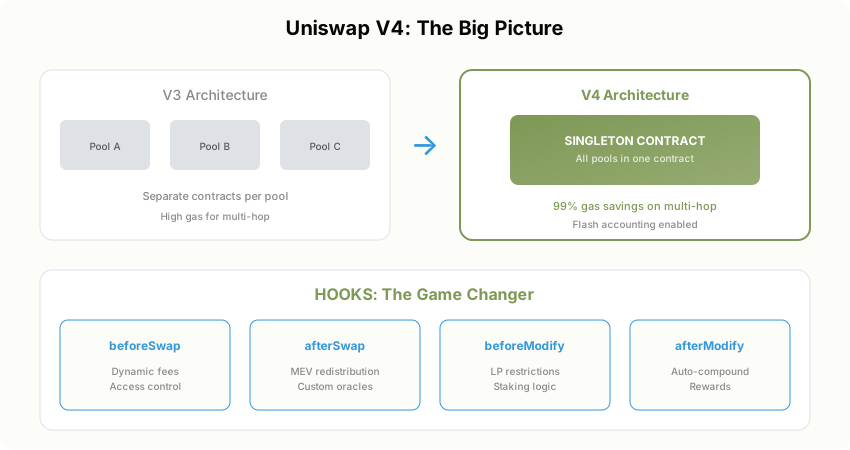
What’s New in V4?
| Innovation | What It Does | Impact |
|---|---|---|
| Hooks | Custom code at every pool lifecycle point | Infinite pool customization |
| Singleton | All pools in one contract | 99% gas savings |
| Flash Accounting | Balance checks at transaction end | Efficient multi-hop |
| Native ETH | No WETH wrapping required | Simpler, cheaper trades |
Understanding Hooks
Hooks are smart contracts that execute at specific points in a pool’s operation. They’re the core innovation that transforms V4 into a platform.
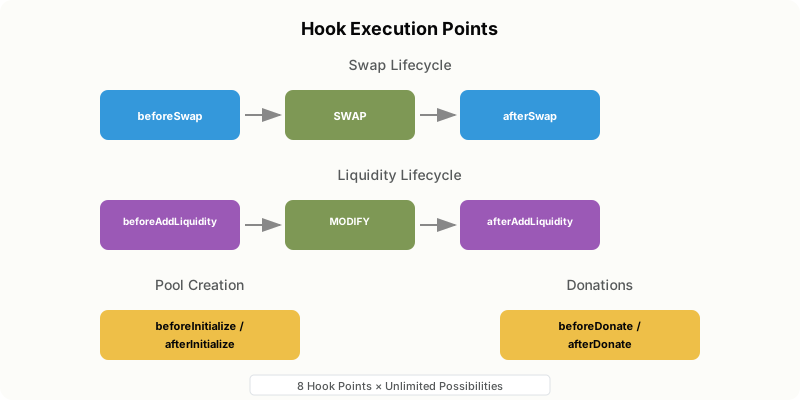
What Can Hooks Do?
- Dynamic Fees — Adjust fees based on volatility or market conditions
- TWAMM — Time-Weighted AMM for large orders over time
- Limit Orders — Native on-chain limit orders
- MEV Protection — Capture and redistribute MEV to LPs
- Custom Oracles — Integrate any pricing source
- KYC/Permissioned Pools — Restrict access for compliance
- Auto-Compounding — Automatically reinvest LP fees
The Singleton Architecture
In V3, every pool was a separate contract. V4 consolidates everything into a single PoolManager contract:
| Aspect | V3 (Separate Contracts) | V4 (Singleton) |
|---|---|---|
| Multi-hop gas cost | Full ERC20 transfers each hop | Internal accounting only |
| Pool creation | Deploy new contract (~$3M gas) | Simple state update |
Flash Accounting
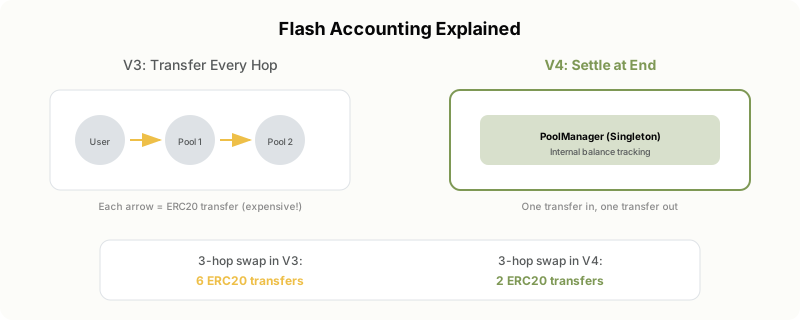
Flash accounting tracks balances internally and only settles at transaction end:
- 3-hop swap in V3: 6 ERC20 transfers
- 3-hop swap in V4: 2 ERC20 transfers
Implications for Users
For Traders
- Lower gas costs — Especially for complex routes
- Better prices — More efficient routing
- New features — Limit orders, TWAMM, etc.
- Native ETH — No more WETH wrapping
For Liquidity Providers
- More options — Choose pools with preferred hooks
- MEV protection — Hooks can redistribute MEV
- Auto-features — Compounding, rebalancing via hooks
Security Considerations
Hook Risks
Hooks introduce new trust assumptions. Before using a pool with hooks:
- Verify the hook contract is audited
- Understand what the hook does
- Check if the hook is upgradeable
- Consider the hook developer’s reputation
Key Takeaways
- Hooks enable unlimited pool customization through callback functions
- Singleton architecture reduces gas costs by up to 99% for multi-hop
- Flash accounting enables efficient internal balance tracking
- Native ETH support eliminates WETH wrapping
- V4 transforms Uniswap from a DEX into an AMM platform
- Hooks introduce new security considerations — verify before using